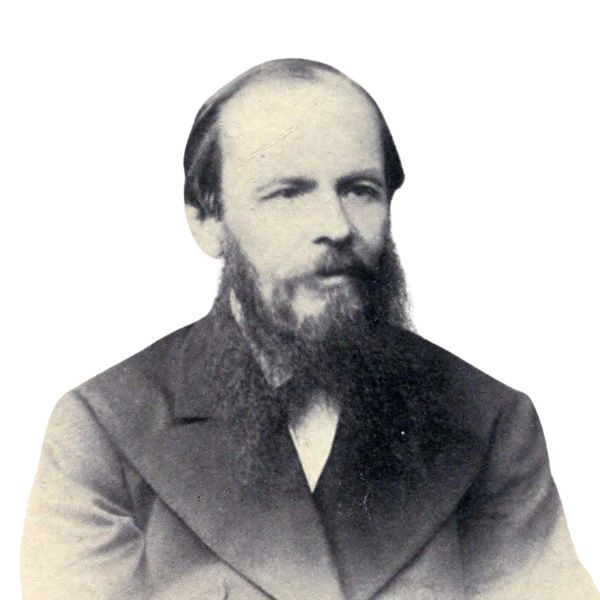
Why he matters
A novelist of the human condition from the inside
Dostoevsky matters because he dramatized questions that philosophy often states abstractly: What is freedom? What is guilt? Why do humans act against their own interests? Can suffering reveal truth? Why does pride so often distort love?
His novels are not merely stories about individuals in nineteenth-century Russia. They are investigations into the moral and psychological forces that continue to shape human life: conscience, humiliation, resentment, ideology, faith, despair, compassion, and the longing to be forgiven.
Core ideas
Ideas worth returning to
Human beings are divided against themselves
Dostoevsky’s characters often know the good and still resist it. They reveal the gap between reason, desire, conscience, pride, and action.
Freedom is frightening
For Dostoevsky, freedom is not simply liberation. It can be terrifying, because it exposes us to responsibility, uncertainty, guilt, and moral choice.
Suffering can reveal, but not automatically redeem
His work treats suffering seriously. It may deepen compassion and self-knowledge, but it can also produce bitterness, cruelty, and spiritual collapse.
Reason alone cannot save us
Dostoevsky repeatedly challenges the idea that human life can be solved by rational systems, social engineering, or clean ideological formulas.
Guilt and conscience shape the self
His characters show how guilt can destroy a person, but also how conscience can become the beginning of moral awakening.
Compassion is the deepest counterforce
Against humiliation, resentment, and despair, Dostoevsky returns again and again to pity, forgiveness, humility, and human fellow-feeling.
Key works
Where to begin
Notes from Underground
A short, ferocious entry point into resentment, self-consciousness, spite, and the irrational refusal to be reduced to a system.
Crime and Punishment
A psychological descent into guilt, pride, moral transgression, conscience, and the possibility of confession and renewal.
The Brothers Karamazov
Dostoevsky’s vast exploration of faith, doubt, freedom, responsibility, suffering, love, and the moral destiny of human beings.
Connection to ALU
What Dostoevsky helps us untangle
A Life Untangled is interested in the contradiction at the heart of human nature: our longing for goodness, meaning, love, and truth, alongside our capacity for denial, cruelty, vanity, and self-destruction. Dostoevsky is one of the great literary witnesses to that contradiction.
His work is especially valuable because it does not flatten humans into either saints or sinners, machines or monsters. He shows us as conflicted beings: capable of tenderness and brutality, insight and evasion, freedom and self-imprisonment.
That makes Dostoevsky a natural bridge between literature, philosophy, psychology, religion, and the wider ALU inquiry into the human condition.
Related from the archive
Follow the thread
Questions raised
Questions Dostoevsky leaves us with
- Why do humans sometimes act against their own deepest interests?
- Is freedom meaningful without responsibility?
- Can suffering reveal truth, or can it deform us?
- Why does resentment so easily become identity?
- Can compassion survive in a world shaped by humiliation, pride, fear, and guilt?
Further reading


