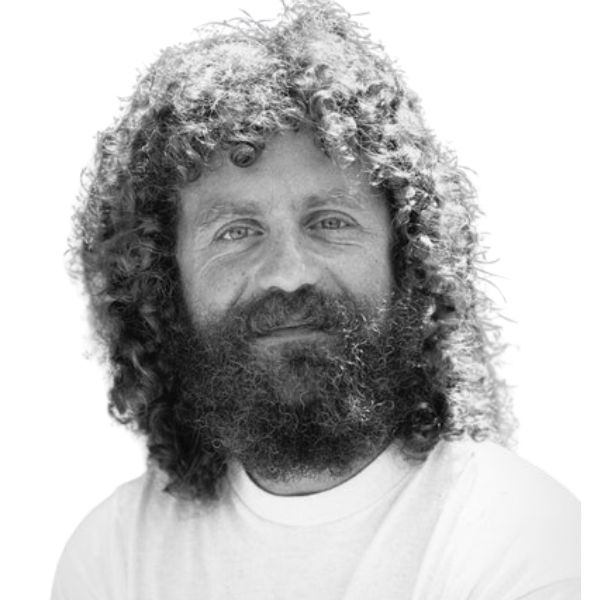
Why he matters
A biological challenge to simple explanations
Robert Sapolsky matters because he brings neuroscience, endocrinology, primatology, psychology, and evolutionary biology into contact with one of the hardest questions of all: why do humans behave the way we do?
His work complicates easy moral explanations. Instead of treating behaviour as merely a matter of willpower, character, or isolated choice, he asks us to examine the layers of causation that precede any action: genes, hormones, childhood, stress, social hierarchy, culture, and environment.
Core ideas
Ideas worth returning to
Behaviour has deep causes
Human action emerges from interacting layers of biology, development, social context, stress, learning, and circumstance.
Stress shapes body and mind
Stress is not only a feeling. Chronic stress can alter health, judgement, mood, attention, and social behaviour.
Free will is not simple
Sapolsky challenges the idea that people are self-created agents choosing freely from outside the chain of causes that formed them.
Humans are primates with culture
We are animals shaped by biology, but also symbolic beings shaped by stories, institutions, meaning, and inherited worlds.
Compassion requires explanation
If behaviour has causes, moral judgement becomes more demanding, more informed, and less reflexively punitive.
Science unsettles certainty
The deeper we look into behaviour, the harder it becomes to rely on simple categories of good people, bad people, and isolated choice.
Key works
Where to begin
Behave
A broad exploration of the biological and cultural forces that shape human behaviour, from milliseconds before an action to evolutionary history.
Determined
A direct challenge to conventional ideas of free will, responsibility, blame, punishment, and moral desert.
Why Zebras Don’t Get Ulcers
A classic introduction to stress, biology, and the costs of chronic psychological pressure.
Connection to ALU
What Sapolsky helps us untangle
Sapolsky’s work belongs in A Life Untangled because it refuses shallow accounts of human behaviour. It asks us to look beneath moral labels and examine the biological, developmental, and cultural causes that produce action.
That does not make human beings meaningless machines. It makes the task of understanding ourselves more serious. If our actions emerge from many layers of causation, then compassion, responsibility, justice, and social reform all need to be thought through more carefully.
Related from the archive
Follow the thread
Questions raised
Questions Sapolsky leaves us with
- Are we responsible for actions we did not fully choose?
- Can society hold people accountable without pretending they are self-created?
- Does understanding behaviour biologically make us more compassionate?
- Where does freedom fit if every action has causes?
- Can biology explain morality, or only part of it?
Further reading


